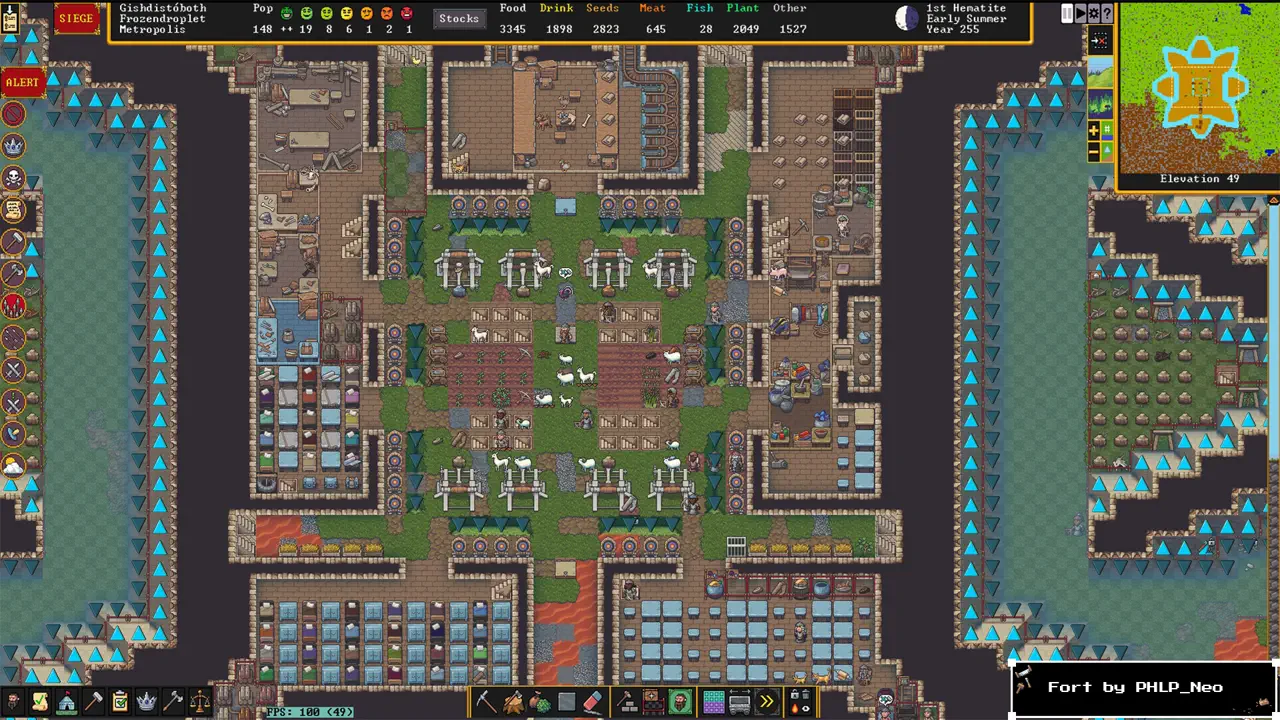
The Dwarf Fortress Siege Update is important because it attacks a comfortable old truth: if your fortress had one controlled entrance, a trap hallway, and enough patience, many invasions could be reduced to pathfinding management. The update pushes sieges closer to what the name always promised: attackers trying to breach a place, not politely walking into the machine built to kill them.
The result is not that classic fortress defense is dead. It is that passive defense is less trustworthy. Players now have stronger reasons to think about layered walls, active weapon crews, fallback rooms, controlled entrances, and what happens when the enemy refuses to behave like a queue.
The short version
The Siege Update added new attacker behaviors and new defensive tools. Reports around the update highlighted smarter goblin forces, battering rams, trolls that can interfere with constructed defenses, and improved siege engines such as faster bolt throwers. The design direction is clear: attackers should challenge fortress architecture, not only open paths.
Why old defenses needed pressure
Dwarf Fortress is at its best when a plan works until it meets a system you forgot. For years, many siege solutions leaned on predictable movement: create a legal route, cover it with traps, lock alternate paths, and let invaders march toward their own undoing. That is satisfying once. It is less satisfying after the same design solves every war.
| Old habit | New concern | Better response |
|---|---|---|
| One perfect entrance | A breach or bypass can turn perfection into fragility. | Use layers, fallback doors, and defensible interior space. |
| Trap-only corridors | Smarter invaders make passive murder hallways less universal. | Combine traps with marksdwarves, drawbridges, and retreat plans. |
| Thin outer walls | Destroyers and engineering behavior make exposed edges matter. | Add buffers, moat-like gaps, and protected access routes. |
| Ignoring siege engines | Active defense is more attractive when attackers are active too. | Experiment with ballistas, bolt throwers, and safe firing arcs. |
Concrete defensive changes to test
| Test | What to build | What you learn |
|---|---|---|
| Outer delay layer | A gate, bridge, wall buffer, or sacrificial yard before the real entrance. | Whether invaders can damage or bypass your first assumption. |
| Active firing lane | Marksdwarf positions or siege engines covering a predictable approach. | Whether your defense still works when traps are not enough. |
| Civilian burrow plan | A safe interior burrow with food, beds, and no path through the battle zone. | Whether the fortress can keep functioning during a siege. |
| Fallback stairwell | A locked internal route from workshops to bedrooms and food stores. | Whether a breached entrance becomes a fortress-wide massacre. |
How to approach a new fort after the update
- Build the first entrance to be controllable, not beautiful.
- Plan a second defensive line before the first one is tested.
- Keep civilians away from breach zones with burrows, doors, and stair discipline.
- Make room for marksdwarves and siege equipment instead of relying only on traps.
- Treat every exterior workshop, pasture, and stockpile as something invaders may punish.
A good post-update fortress is not one wall. It is a sequence of bad days the enemy has to survive.
The Siege Update matters beyond patch notes because it restores uncertainty to a part of the game veterans had partly solved, and in a colony sim, uncertainty is where the best stories usually begin.