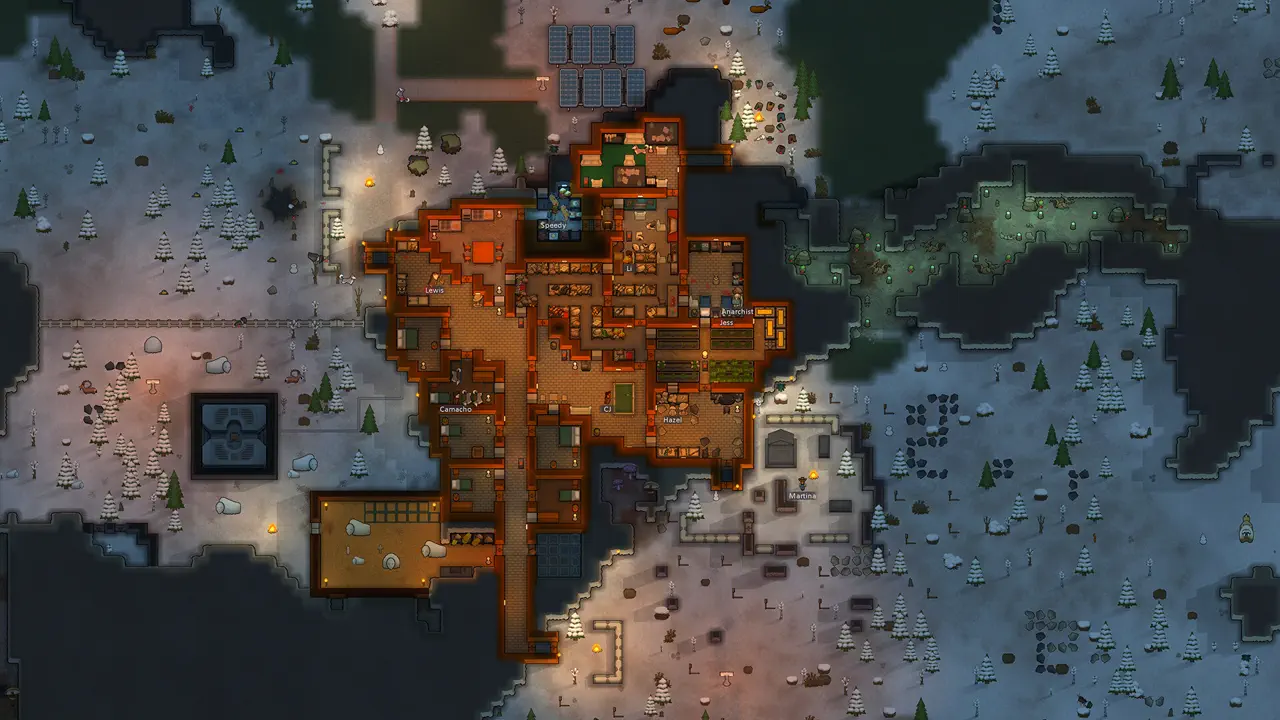
RimWorld DLC is best understood as five different ways to bend the same colony-sim engine. Royalty adds nobility, psychic powers, quests, and high-tech rewards. Ideology lets you define what your colony believes. Biotech adds families, children, xenotypes, vampires, mechanoid labor, and pollution. Anomaly turns the game into a containment-horror campaign. Odyssey makes the colony mobile through gravships, new biomes, orbital sites, animals, and exploration.
This guide covers gameplay DLC only. It deliberately excludes soundtracks and Name in Game Access because those are not mechanical expansion packs. Steam's DLC page currently lists five gameplay expansions: Royalty, Ideology, Biotech, Anomaly, and Odyssey. The review scores below use Steam English review summaries checked on June 15, 2026, so treat them as a snapshot rather than permanent verdicts.
The short buying order
| DLC | Release | Steam English review signal | Buy first if you want | Wait if |
|---|---|---|---|---|
| Biotech | 21 Oct 2022 | Very Positive, 93% of 2,021 reviews | The biggest systemic expansion: children, genes, xenotypes, mechanitors, mech labor, bosses, pollution. | You want a lighter vanilla run without family, genetics, or mechanitor systems. |
| Odyssey | 11 Jul 2025 | Very Positive, 92% of 1,964 reviews; recent reviews were Mixed in the snapshot | A mobile colony, gravships, new biomes, orbit, animals, fishing, landmarks, and bigger exploration arcs. | You prefer one settled map and do not want travel to become the campaign identity. |
| Ideology | 20 Jul 2021 | Very Positive, 83% of 2,229 reviews | Roleplay, cults, rituals, precepts, themed colonies, social roles, relic hunts, and Archonexus runs. | You dislike colony rules that create extra mood demands and behavior restrictions. |
| Royalty | 24 Feb 2020 | Very Positive, 85% of 1,563 reviews | Psycasts, Imperial titles, high-tech melee, shuttle permits, quests, mech clusters, and noble court flavor. | You want broad everyday systems more than a faction-and-powers layer. |
| Anomaly | 11 Apr 2024 | Mostly Positive, 79% of 1,854 reviews | A horror-focused campaign with entities, containment, cultists, rituals, bioferrite, and a void endgame. | You want classic RimWorld more than a dominant themed scenario. |
For most new RimWorld players buying only one expansion, Biotech is the safest first recommendation. It touches daily colony life, long-term family stories, labor automation, faction identity, and combat. If you already love RimWorld and want a fresh macro-campaign, Odyssey is the exciting modern pick. If you primarily roleplay, Ideology may be more important than either. Anomaly is excellent for the right player, but it is the least universal because horror can take over the tone of a run.
RimWorld - Biotech
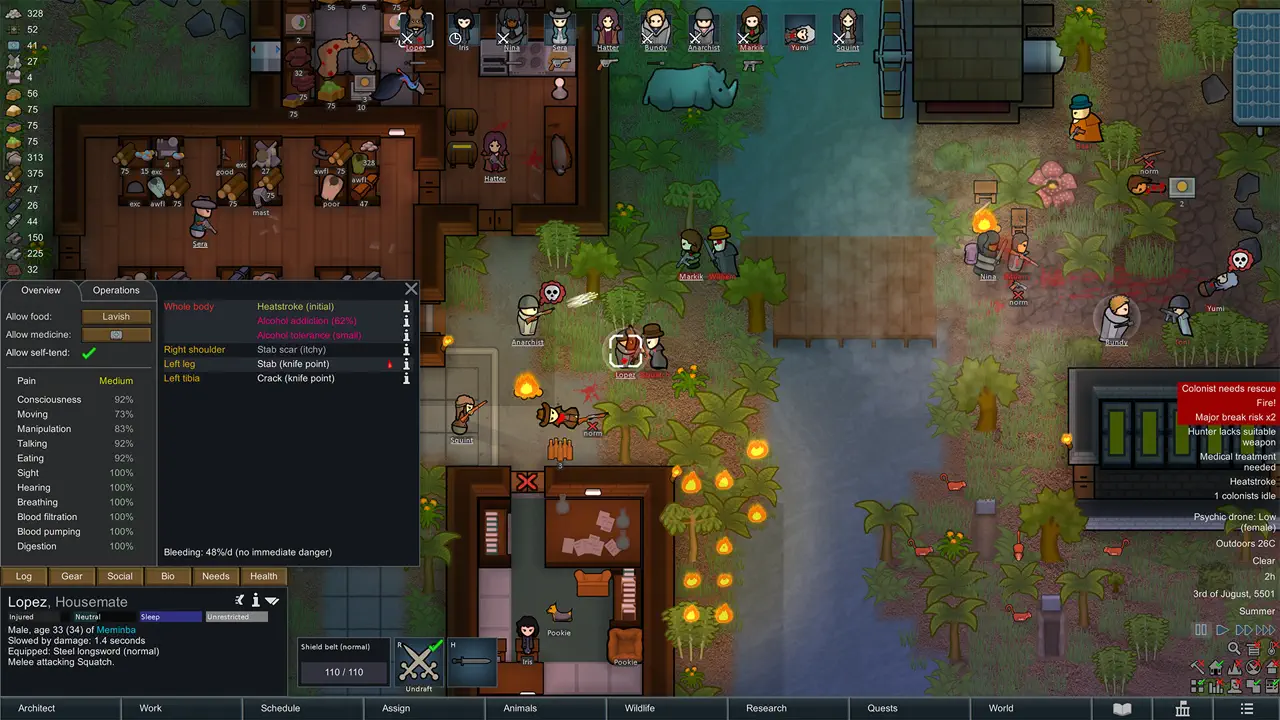
Biotech is the DLC that most often feels like RimWorld 2 hiding inside RimWorld. Its three headline systems are children and family, genetic modification, and mechanitor-controlled mechanoids. Those systems are not cosmetic. They change how a settlement grows, how labor scales, how raids are answered, and how players think about pawn identity.
The family layer gives colonies a reason to care about time in a different way. Children can be born, raised, educated, accelerated through growth vats, or shaped by the quality of their upbringing. That adds softer drama to a game often remembered for raids and disasters. A child born in the colony can become a doctor, crafter, soldier, or tragedy several in-game years later, which makes the colony feel less like a survival camp and more like a society.
The gene system is the deeper mechanical hook. Xenohumans can have strengths, weaknesses, dependencies, combat abilities, environmental adaptations, metabolism tradeoffs, and social consequences. You can recruit existing xenotypes, extract genes, recombine them, and build specialized colonists. That creates powerful stories: heat-resistant workers for harsh maps, combat breeds, sleepless labor specialists, sanguophage rulers, or fragile super-specialists who need the colony to support their biology.
Mechanitors add another kind of long-term arc. A mechanitor can command mechanoids for hauling, construction, farming, crafting, combat, and support. That gives smaller colonies a way to scale labor without recruiting every wanderer. The price is infrastructure: gestators, bandwidth, control groups, wastepacks, pollution management, and boss progression. A mechanitor colony can feel brilliant when it works and cursed when toxic waste starts becoming tomorrow's crisis.
What reviews and players tend to reward
Biotech has the strongest Steam English review score among the older DLCs in this snapshot: Very Positive, with 93% of 2,021 English reviews positive. That fits the expansion's reputation. It adds systems that feel native to RimWorld instead of sitting on top of it. Families create emotional continuity, genes create identity, and mechs create a new labor economy. Even players who ignore one pillar can often enjoy another.
The main drawback is complexity. Biotech is generous, but it is not light. New players may find babies, genes, mechanitor bandwidth, pollution, sanguophages, xenotype factions, and boss progression a lot to absorb at once. The best way to play it is not to force every system into the first run. Let one story lead: a family colony, a vampire noble, a mechanitor workshop, a gene-lab settlement, or a polluted industrial base.
| Biotech system | Why it matters |
|---|---|
| Children and families | Turns time, safety, bedrooms, education, and colony continuity into story systems. |
| Genes and xenotypes | Lets colonists become biologically specialized rather than only skill-specialized. |
| Sanguophages | Adds immortal blood-drinkers with strong powers, needs, and roleplay hooks. |
| Mechanitors | Creates robot labor and mech combat without relying only on recruited pawns. |
| Pollution | Makes industrial convenience create map-scale consequences. |
Recommendation: buy Biotech first if you want the expansion with the broadest day-to-day impact. It is the best single DLC for players who want RimWorld to become deeper without changing into a totally different genre.
RimWorld - Odyssey
Odyssey is the expansion for players who have already built enough mountain bases, killboxes, freezer rooms, and research benches to want a bigger horizon. Its central idea is the gravship: a player-built mobile base that starts small and can become a travelling colony with living quarters, workshops, labs, storage, fuel, and survival systems.
That single concept changes RimWorld's rhythm. A normal colony asks whether one map tile can become stable. Odyssey asks what the colony must carry, what it can leave behind, and how it survives movement. Fuel, crew selection, food storage, medicine, spare parts, animals, and room layout become expedition decisions. A gravship does not replace base building; it compresses it into a vehicle.
The official feature list also expands where the colony can go. Odyssey adds new biomes such as glowforests, scarlands, grasslands, glacial plains, and lava fields, plus landmarks like cliffs, coasts, abandoned structures, ancient ruins, orbital platforms, asteroids, and satellites. It also adds over 40 animals, fishing, orbital survival requirements, new weapons, traps, enemies, and a machine hive mind arc.
What reviews and players tend to reward
Odyssey's Steam English score is Very Positive in this snapshot, with 92% of 1,964 English reviews positive. That is a strong signal for such a large expansion. It suggests players are responding to the scale of the pack: gravships, exploration, orbit, landmarks, animals, and the feeling that RimWorld has a new late-game spine.
The warning sign is the recent-review snapshot: Steam showed Recent Reviews as Mixed, 63% positive from 19 recent English reviews at the time checked. A small recent sample is not enough to overturn the overall reception, but it is worth noting for a buying guide. Big expansions can create balance debates, bug reports, and expectation gaps after the launch rush. If you are sensitive to rough edges, read the newest Steam reviews before buying.
| Odyssey feature | What it changes |
|---|---|
| Gravships | Turns the base into a travelling settlement with cargo, crew, fuel, and room tradeoffs. |
| New biomes | Creates more map identity than another ordinary temperate or desert colony. |
| Orbital sites | Adds vacuum, life support, salvage, and space hazards to RimWorld's exploration loop. |
| Animals and fishing | Makes wilderness and food planning feel broader. |
| Machine hive mind | Gives the expansion a large late-game threat and endgame decision. |
Recommendation: buy Odyssey early if you are already comfortable with RimWorld and want the newest, largest-feeling campaign structure. If you are still learning the base game, Biotech or Ideology may integrate more naturally into ordinary colony life.
RimWorld - Ideology
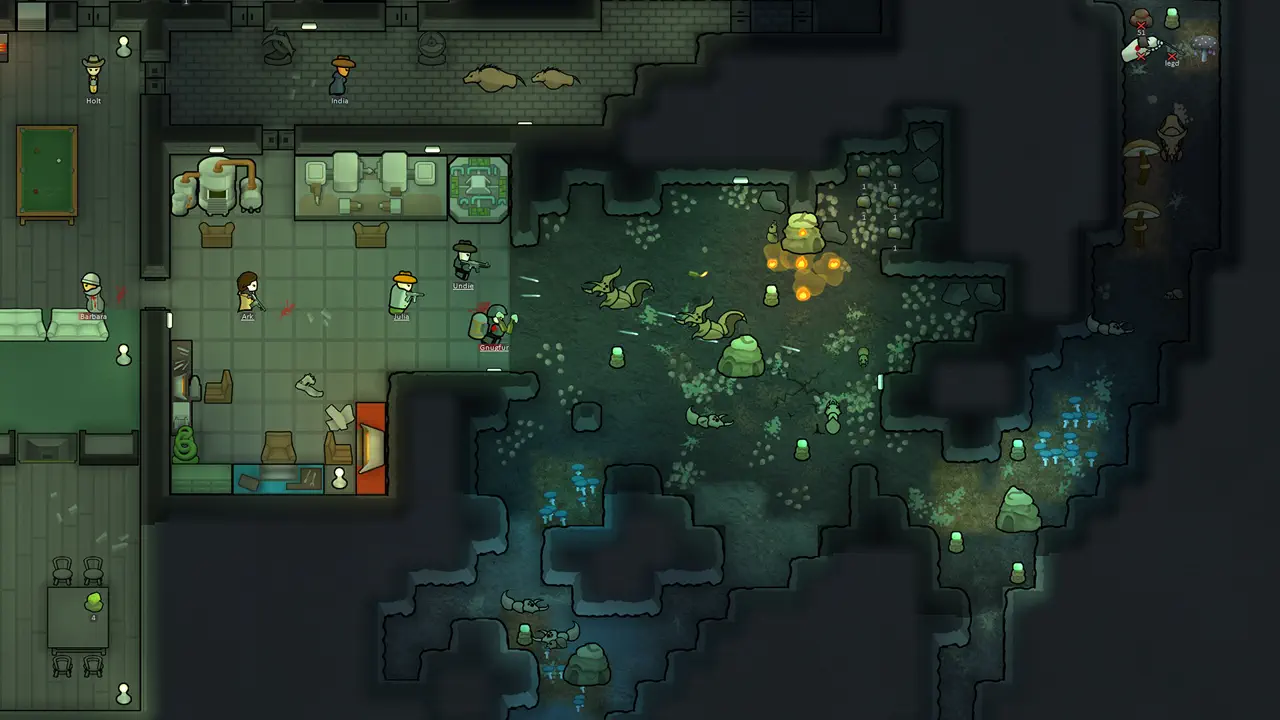
Ideology is the roleplay expansion. It adds belief systems that shape what colonists value, forbid, celebrate, tolerate, demand, and ritualize. A colony can become transhumanist, cannibal, rancher, tree-connected, pain-worshipping, blind, collectivist, raider, undergrounder, nature-focused, supremacist, guilty, high-life, loyalist, or some strange blend you build yourself.
Mechanically, beliefs are built from memes and precepts. Memes define the broad identity of a belief system; precepts define specific rules around food, comfort, corpses, drugs, body modification, clothing, weapons, work, research, charity, execution, slavery, venerated animals, tree cutting, darkness, scars, and more. This means Ideology can turn ordinary RimWorld actions into moral choices with mood consequences.
The expansion also adds social roles, rituals, relic hunts, temples, special buildings, specialists, leaders, moral guides, conversion, dryads, and the Archonexus endgame. Its best stories happen when the belief system creates a colony you would not otherwise build: cave dwellers who hate sunlight, ranchers who reject farming, transhumanists chasing body upgrades, or charity-focused survivors trying to remain decent when food runs out.
What reviews and players tend to reward
Steam's English review snapshot for Ideology is Very Positive, with 83% of 2,229 English reviews positive. That is good, but lower than Biotech and Odyssey. The likely reason is not quality so much as fit. Ideology is powerful when you want theme and self-imposed rules; it can feel like friction when you only want freeform optimization.
Positive player sentiment tends to focus on roleplay depth, replayability, and the way beliefs make colonies distinct. Critical sentiment often clusters around micromanagement, mood penalties, conversion busywork, and the feeling that some precepts can become chores if you choose them without understanding the consequences. It is a builder of memorable runs, but it asks you to enjoy constraints.
| Ideology system | Why it matters |
|---|---|
| Memes and precepts | Turn colony values into rules that affect daily play. |
| Rituals | Create repeatable social events with rewards, mood effects, and story flavor. |
| Roles and specialists | Let a belief system formalize leaders, moral guides, and expert pawns. |
| Relics and temples | Give long-term cultural goals beyond survival. |
| Archonexus | Adds a colony-resetting endgame for players who want a strange long campaign. |
Recommendation: buy Ideology if you are bored of every colony becoming the same efficient bunker. Skip it as a first DLC if you hate rule-based roleplay or do not want belief systems pushing pawn behavior.
RimWorld - Royalty
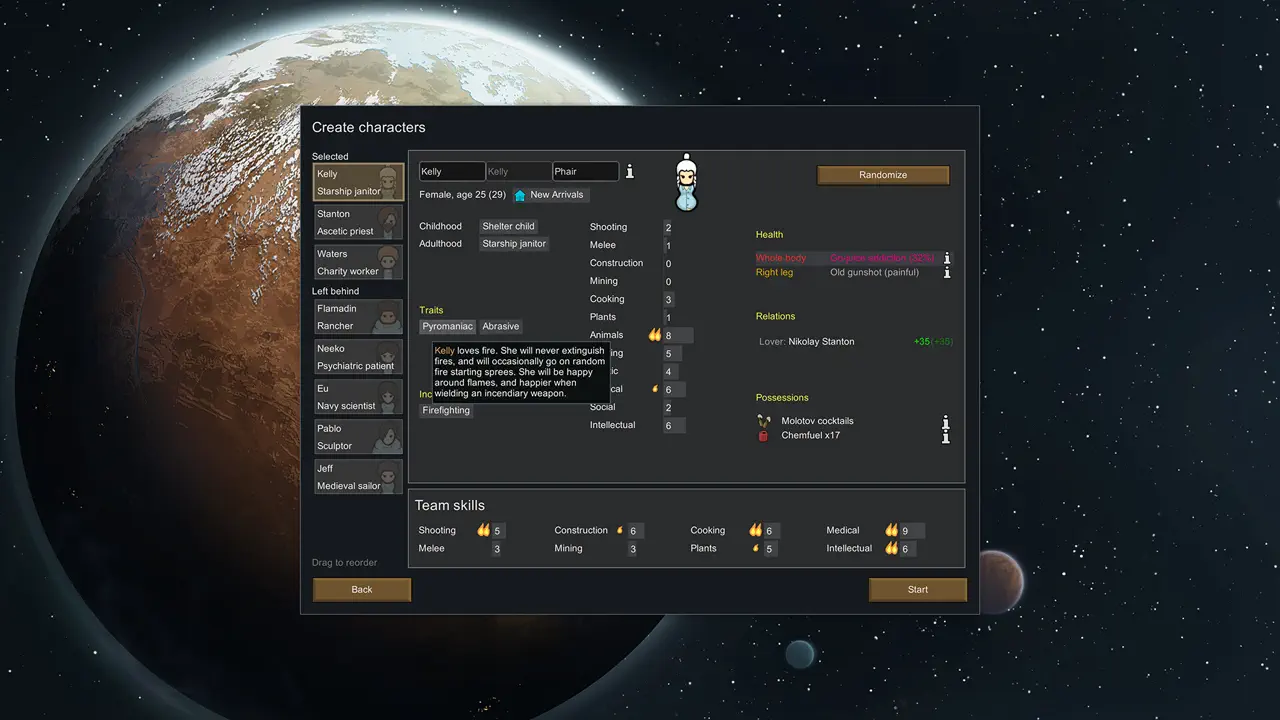
Royalty was RimWorld's first gameplay expansion, and it still has a clear identity: the Empire arrives, and the colony can engage with noble titles, honor, psycasting, Imperial permits, throne rooms, ceremonial expectations, high-tech gear, persona weapons, new implants, quests, mech clusters, and an Imperial endgame.
The strongest part of Royalty is psycasting. Psychic powers add tactical and social tools that feel different from another gun or another turret. Skip can reposition pawns, move enemies, save wounded colonists, or break a firefight open. Invisibility, berserk effects, stun, burden, waterskip, word powers, farskip, neural heat management, and other abilities give individual pawns a heroic layer without turning RimWorld into a traditional RPG.
The Empire layer is more specific. Colonists can earn honor, gain titles, require better rooms, demand courtly expectations, and unlock permits such as troop aid, labor teams, shuttles, and orbital attacks. That can make a pawn feel like a noble asset rather than just another worker. It also adds friction: a titled colonist with room and apparel expectations can be annoying if you wanted a stripped-down survival base.
What reviews and players tend to reward
Royalty's Steam English review snapshot is Very Positive, with 85% of 1,563 English reviews positive. That is a respectable score, especially for the first expansion, but its value depends heavily on whether you like the Imperial fantasy and psychic combat. Players who enjoy tactical problem solving often love psycasts and permits. Players who want systems that affect every pawn every day may find Royalty narrower than Biotech or Ideology.
Royalty has aged better than many first DLCs because later RimWorld systems can sit beside it. A Biotech mechanitor noble, an Ideology cult leader with psycasts, or an Odyssey ship captain with Imperial permits all make sense. Still, it is rarely the first DLC we would recommend unless psychic powers and quest rewards are exactly what you want.
| Royalty feature | Best use |
|---|---|
| Psycasts | Tactical movement, crowd control, recruitment help, mood tools, and dramatic rescues. |
| Imperial titles | A progression path for noble pawns with room, apparel, and court expectations. |
| Permits | Calling soldiers, labor, shuttles, or orbital support when the colony needs help. |
| Mech clusters | More deliberate combat puzzles than ordinary raids. |
| Persona weapons and implants | Late-game pawn specialization and memorable equipment stories. |
Recommendation: buy Royalty if you want more tactical toys, stronger quest rewards, and noble/psychic flavor. It is less broad than Biotech, but it adds some of the most satisfying individual-pawn power moments in the game.
RimWorld - Anomaly
Anomaly is not just more RimWorld content. It is a horror expansion with a strong theme. The official description centers on a dark monolith, an awakened machine-mind, flesh infestations, cultist attacks, shambling undead, blood rains, invisible hunters, parasites, obelisks, golden-cube obsession, containment, psychic rituals, bioferrite, void-powered equipment, and a new endgame.
Its main loop is study and containment. Instead of only shooting raiders or building around weather, you capture entities, hold them in secure facilities, research them, harvest or exploit their power, and hope the colony can manage what it has chosen to keep alive. That makes Anomaly feel closer to a playable SCP-style scenario than a normal expansion pack.
The best Anomaly runs are tense because information matters. Is the threat visible? Is a colonist infected? Can the containment wing hold? Is the ritual worth the cost? Do you exploit the entity or kill it? The colony is not only defending against external raids; it is choosing how much danger to invite inside the walls.
What reviews and players tend to reward
Anomaly is the most divisive gameplay DLC by Steam English review score in this snapshot: Mostly Positive, with 79% of 1,854 English reviews positive. That does not mean it is weak. It means its design is narrower and more forceful. Players who want RimWorld to become horror often praise the atmosphere and event design. Players who want the classic sandbox may feel the monolith storyline dominates the run.
The key buying question is tone. Biotech and Ideology can fade into normal colony life. Anomaly wants attention. If you activate its systems, your colony is likely to become a horror facility, a cult, a monster lab, or a desperate bunker. For some players, that is exactly the point. For others, it is too much theme in a game they prefer as open-ended survival.
| Anomaly feature | Why it matters |
|---|---|
| Entities | Creates threats that must be studied, contained, or exploited rather than simply killed. |
| Containment | Turns base design into facility design: walls, doors, security, and risk control. |
| Bioferrite and void gear | Rewards dangerous research with strange tools and weapons. |
| Cultists and rituals | Adds human enemies and player-driven psychic consequences. |
| Void endgame | Gives the horror campaign a focused destination. |
Recommendation: buy Anomaly when you want a themed horror campaign. Do not buy it first if your ideal RimWorld is a flexible colony sandbox where the story tone emerges more quietly.
Best DLC combinations
| Combination | Why it works |
|---|---|
| Biotech + Ideology | The strongest everyday colony combo: biology, family, culture, rituals, genes, social rules, and long-term identity. |
| Biotech + Royalty | Great for power fantasy: mechanitors, xenotypes, sanguophages, psycasts, permits, and elite gear. |
| Ideology + Anomaly | Excellent for cult colonies, forbidden research, rituals, conversion drama, and moral collapse. |
| Odyssey + Biotech | A huge campaign package: mobile colony planning plus families, genes, mechs, pollution, and specialized crews. |
| Odyssey + Royalty | A strong late-game adventure setup: ship captain nobles, psycasters, shuttle permits, and orbital expeditions. |
Which RimWorld DLC should you buy first?
Buy Biotech first if you want the most generally useful expansion. It is the easiest answer because it improves the core RimWorld fantasy: pawns become more personal, labor becomes more interesting, colonies can grow across generations, and factions become biologically distinct.
Buy Odyssey first if you already know RimWorld well and want a new campaign shape. It is less about adding one system to the old colony and more about changing what a colony can be. For veterans, that is exciting. For brand-new players, it may be too much before the base game clicks.
Buy Ideology first if you roleplay heavily. It is the expansion for players who want a colony to have beliefs, rituals, taboos, specialist roles, and self-imposed cultural rules. It makes saves more distinct, but it can also make them more demanding.
Buy Royalty first if psychic powers, Imperial titles, noble rooms, quest rewards, permits, and high-tech combat sound exciting. It is not the broadest DLC, but its best tools are fun and dramatic.
Buy Anomaly first only if the horror pitch is the reason you are here. It is a strong expansion, but not the most neutral entry point. Anomaly is best when you actively want RimWorld to become creepy, invasive, and strange.
FAQ
Do I need every RimWorld DLC?
No. RimWorld is already complete without DLC. The expansions are best treated as campaign modifiers. Buy one that matches the kind of run you want, then add more once you know which systems you actually enjoy.
Which RimWorld DLC has the best reviews?
In the Steam English review snapshot checked on June 15, 2026, Biotech had the highest percentage among the older expansions at 93% positive from 2,021 English reviews. Odyssey was also very strong overall at 92% positive from 1,964 English reviews, though its recent-review snapshot was mixed at that time.
Is Anomaly worth it if I do not like horror?
Probably not as an early purchase. Anomaly is good at what it does, but what it does is very specific. If you want classic colony drama, choose Biotech, Ideology, Royalty, or Odyssey first.
Are the RimWorld soundtracks DLC?
They are listed on Steam as downloadable content, but they are not gameplay expansions. This guide excludes soundtracks and Name in Game Access so the buying advice stays focused on playable mechanics.
The best RimWorld DLC is not the one with the longest feature list. It is the one that makes your next colony fail in a way you actually want to remember.