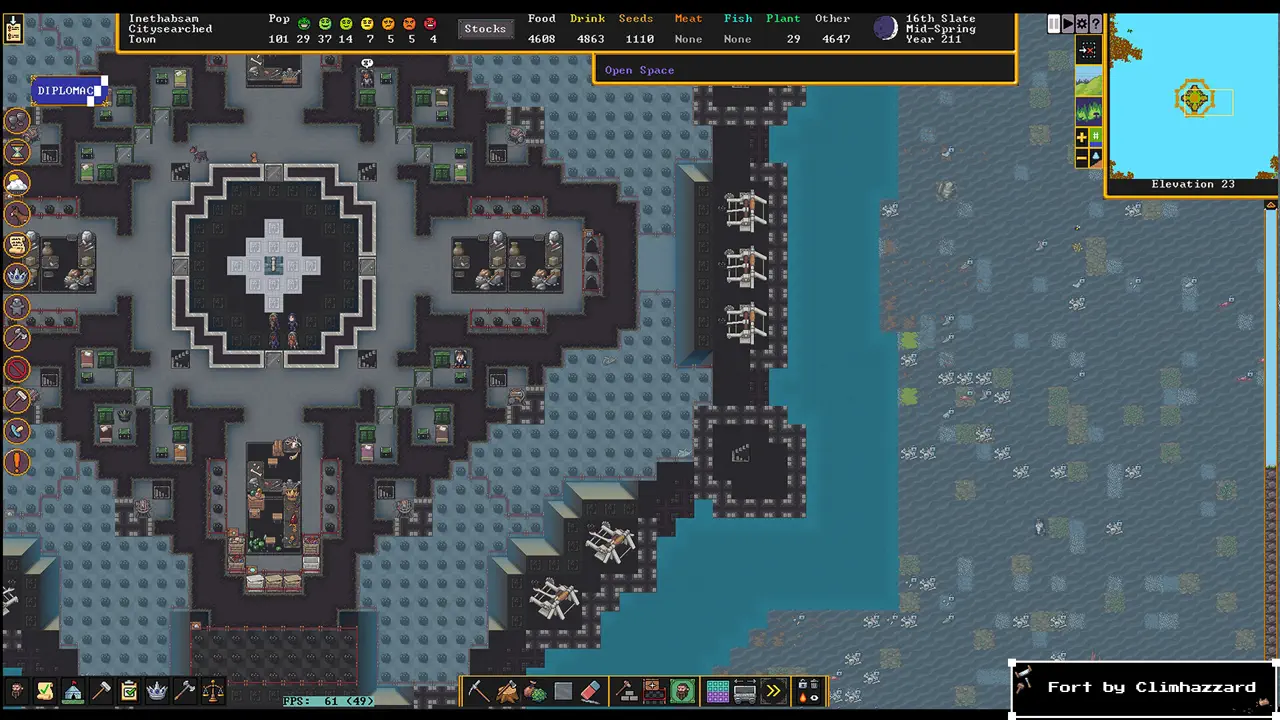
Secret Lair x Dwarf Fortress is not just a novelty crossover for Magic: The Gathering collectors. It is a useful reminder that Dwarf Fortress has become recognizable through systems, symbols, and shared stories as much as through conventional art. The reported five-card drop uses ASCII-style imagery, which is exactly the kind of visual language that can make longtime players stop scrolling.
For colony sim readers, the interesting part is not card legality or deck optimization. It is how a game famous for text glyphs, generated histories, and brutal fortress anecdotes became culturally legible enough to sit inside one of tabletop gaming's biggest crossover lines.
What was announced
The Dwarf Fortress Secret Lair was reported as part of Magic's Back to School superdrop, with the set titled Secret Lair x Dwarf Fortress: Create New World. The hook is simple: Dwarf Fortress scenes rendered in the old glyph-heavy style rather than standard fantasy illustration.
That choice matters. A dragon drawn as a traditional fantasy monster would be fine. A dragon suggested through symbolic chaos is more specific to Dwarf Fortress. The crossover is selling recognition, not just branding.
Why ASCII is the right angle
Dwarf Fortress is one of the rare games where the old interface is not merely a technical limitation. For many players, it is part of the myth. Glyphs turned imagination into the rendering engine: a dwarf, a corridor, a floodgate, a forgotten beast, or a fortress dining hall could be tiny on screen and huge in the player's head.
- ASCII art points back to the free classic version and the pre-Steam history of the game.
- It makes the cards feel like an homage rather than a generic fantasy reskin.
- It captures how Dwarf Fortress players read symbols as stories.
- It gives the crossover a visual identity that other Magic fantasy products do not already own.
Should colony sim fans care?
| Audience | Why the Secret Lair matters |
|---|---|
| Dwarf Fortress players | It treats the classic ASCII look as iconic rather than obsolete. |
| Magic collectors | It is a distinct visual oddity inside a crowded Secret Lair catalog. |
| Colony sim fans | It shows how a management sim can become famous through stories rather than characters from a fixed plot. |
| New players | It may be the first time they see Dwarf Fortress presented as a cultural object, not just a difficult game. |
What would make the drop feel authentic
| Design choice | Why it matters |
|---|---|
| Readable ASCII compositions | The art should feel like Dwarf Fortress, not only like fantasy cards with a logo. |
| Artifact flavor | Objects and generated histories are central to the way players remember fortresses. |
| Dark comedy | The best Dwarf Fortress tone is tragic and funny at the same time. |
| Mechanical restraint | A small Secret Lair works better as an homage than as an attempt to explain the whole simulation. |
| Clear product details | Collectors still need card names, treatments, legality, price, and shipping windows before buying. |
The crossover works because Dwarf Fortress already taught players to see whole disasters inside a few symbols.
Secret Lair x Dwarf Fortress is small as a product, but large as a signal: the weird old fortress simulator is now recognizable enough that its visual language can carry a premium crossover on its own.